Corporate Improv Workshop in Ventura County: A Three-Part Plan for Your Team
Plan a corporate improv workshop in Ventura County: a three-part curriculum with timings, how each skill applies to local industries, and mistakes to avoid.
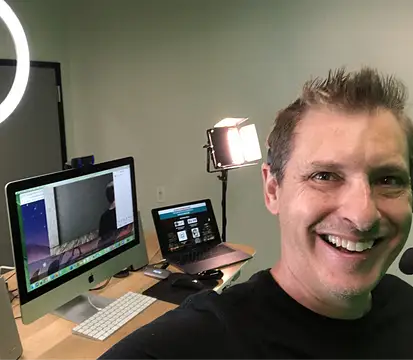 By Scott Topper · October 13, 2026 · 6 min read
A corporate improv workshop is not a comedy class. Nobody on your team needs to be funny, and nobody performs a scene alone. It’s a structured hour where people practice the communication habits improvisers rely on: listening all the way to the end of a sentence, accepting an idea before changing it, and making a decision without a script.
Teams in Ventura, Oxnard, Camarillo, and Thousand Oaks book these for the same reason teams anywhere do. The work depends on people handing ideas to each other cleanly, and most meetings don’t give anyone a chance to practice that. This post lays out a three-part workshop you can run yourself, then shows where each skill lands in the kinds of work done along the 101. For the local overview, see our page on corporate improv training in Santa Barbara and Ventura.
What a Corporate Improv Workshop Covers
Every good business improv workshop builds three skills, in this order:
- Presence. Getting people out of their heads and into the room. On Zoom, that means voices and bodies moving before anyone has to think.
- Listening. Paying attention to what someone actually said, not what you planned to say next.
- Building. Taking what a teammate hands you and adding to it, the “yes, and” rule.
The order matters. If you start with building exercises, the nervous people freeze. Presence first lowers the stakes, so listening and building feel easy by the time you get there.
A Three-Part Workshop You Can Run Yourself
Plan for 50 minutes, 6 to 16 people, everyone on their own camera.
Part 1: Presence (10 minutes)
Big Voice, Small Voice (4 minutes). Everyone says the same sentence together, first in a whisper, then at normal volume, then as if announcing it to a stadium. Use something neutral: “The quarterly report is attached.” Then do it as a sports announcer, a nature documentary narrator, and a pirate. Everyone speaks at once, so nobody is on the spot.
Stretch and Name (6 minutes). Go around by name. Each person makes a stretch with a sound. The whole group copies it. Next name. By the end, everyone has led once and everyone has followed several times.
Part 2: Listening (20 minutes)
Last Word, First Word (8 minutes). One person says a sentence about their week. The next person must start their sentence with the last word of the previous one. Call names to keep the order. People quickly realize they can’t plan their answer; they have to hear the whole sentence first.
Repeat Before You Reply (12 minutes). Pair people in breakout rooms for six minutes. One person describes a small frustration from their workday for one minute. The partner must summarize it in one sentence before saying anything else, and the speaker confirms or corrects. Swap. Back in the main room, ask how often the first summary was right. It’s usually lower than people expect.
Part 3: Building (15 minutes)
Yes, And Product (10 minutes). The group invents a product together. Each person adds one feature that starts with “Yes, and.” Nobody may block or fix an earlier idea. After two rounds, run it once more with “Yes, but” and let people feel how fast the energy drops.
Group Pitch (5 minutes). Three volunteers pitch the product they just invented, one sentence each in rotation, for one minute. Nobody prepared, and it works anyway, because they listened.
Debrief (5 minutes)
Ask one question: “Where in your real week does ‘yes, but’ happen?” Let people answer in chat if they prefer. You’ll get a list of meetings worth fixing.
How These Skills Show Up in Ventura County Work
The skills are the same everywhere, but they show up differently depending on the work your team does.
Biotech and life sciences in the Conejo Valley. Teams in Thousand Oaks and Westlake Village often hand work between research, quality, regulatory, and commercial groups, and each group speaks its own language. Repeat Before You Reply is useful here: a one-sentence summary before a response catches misunderstandings while they’re still cheap.
Agriculture and food businesses around Oxnard and Camarillo. Office teams in ag coordinate with growers, buyers, and logistics partners on tight timelines, and plans change with the weather. Last Word, First Word trains the habit of hearing the full update before reacting to the first half of it.
Outdoor brands and retail in Ventura. Creative and product teams spend a lot of time in brainstorms. Yes, And Product shows how quickly an idea dies when the first response is a correction, and gives people a different default.
Hospitality and tourism along the coast. Front-of-house leaders think on their feet all day, but office meetings often run on scripts. The Group Pitch exercise reminds people that they can speak clearly without preparing slides.
Small teams with colleagues out of state. Plenty of Ventura County offices are a handful of people working with a larger team spread across the country. A workshop on Zoom puts everyone on equal footing: same screen, same games, nobody joining as an afterthought.
Mistakes to Avoid When Running Improv at Work
- Skipping the presence warm-up. Jumping straight to building exercises leaves quiet people stuck.
- Running rounds too long. End each exercise while people still want more.
- Praising individuals. “Great job, Mark” makes everyone else feel graded. Praise the group.
- Explaining too much. Demo the exercise for ten seconds instead. A rough demo beats a perfect explanation.
If you have a few people who never unmute, our guide on how to get a shy team to participate virtually covers that in more detail.
What a Hosted Session Adds
Running the plan above yourself is a solid start. The tradeoff is that you’re managing the clock and calling names, so you don’t get to take part.
The Virtual Office Shenanigans Game is a 60-minute version of this workshop, live on Zoom, hosted by Scott Topper. Scott trained at The Groundlings in Hollywood, was a three-time Emmy-nominated FOX-TV kids show host, and hosts afternoons on K-LITE 101.7 FM. You can read more about Scott. The session uses games like the Vocal Warm-Up, Super Hero Copy Cat, and Whoosh Bang Pow to practice presence, listening, and building, and Scott reads the room so the quiet people get included without being put on the spot.
Brent, whose team works in tech, described it this way: “My company is in the tech industry so we tend to be very “left-brained,” however these improvisational exercises allowed us to utilize our right brain and be creative while listening and reacting to situations on the fly.”
It’s $300 for up to 10 people, plus $25 per additional person, up to 50, with weekday start times from 7am to 7pm Pacific.
Bring It to Your Team
If your main goal is clearer meetings rather than a workshop, our post on communication skills training in Santa Barbara breaks the skills down problem by problem. If you’re planning a broader team event, start with team building in Santa Barbara.
For details on sessions for Ventura County teams, visit our page on corporate improv workshops for Santa Barbara and Ventura teams, then Choose a Date and Time that fits your calendar.